
Aircraft Exterior Detailing and Plane Wash
Paint on an airframe takes more abuse than paint on anything that stays on the ground. UV at altitude, rain erosion on leading edges, exhaust soot streaking aft, hydraulic film on the belly, and bugs that hit at 90 knots and bake on.
An aircraft exterior cleaning is not a car wash with a taller ladder. Joel Espiritu washes by hand at your hangar or on the ramp, anywhere in California except San Diego County, usually overnight. Free estimates, (323) 795-3215.
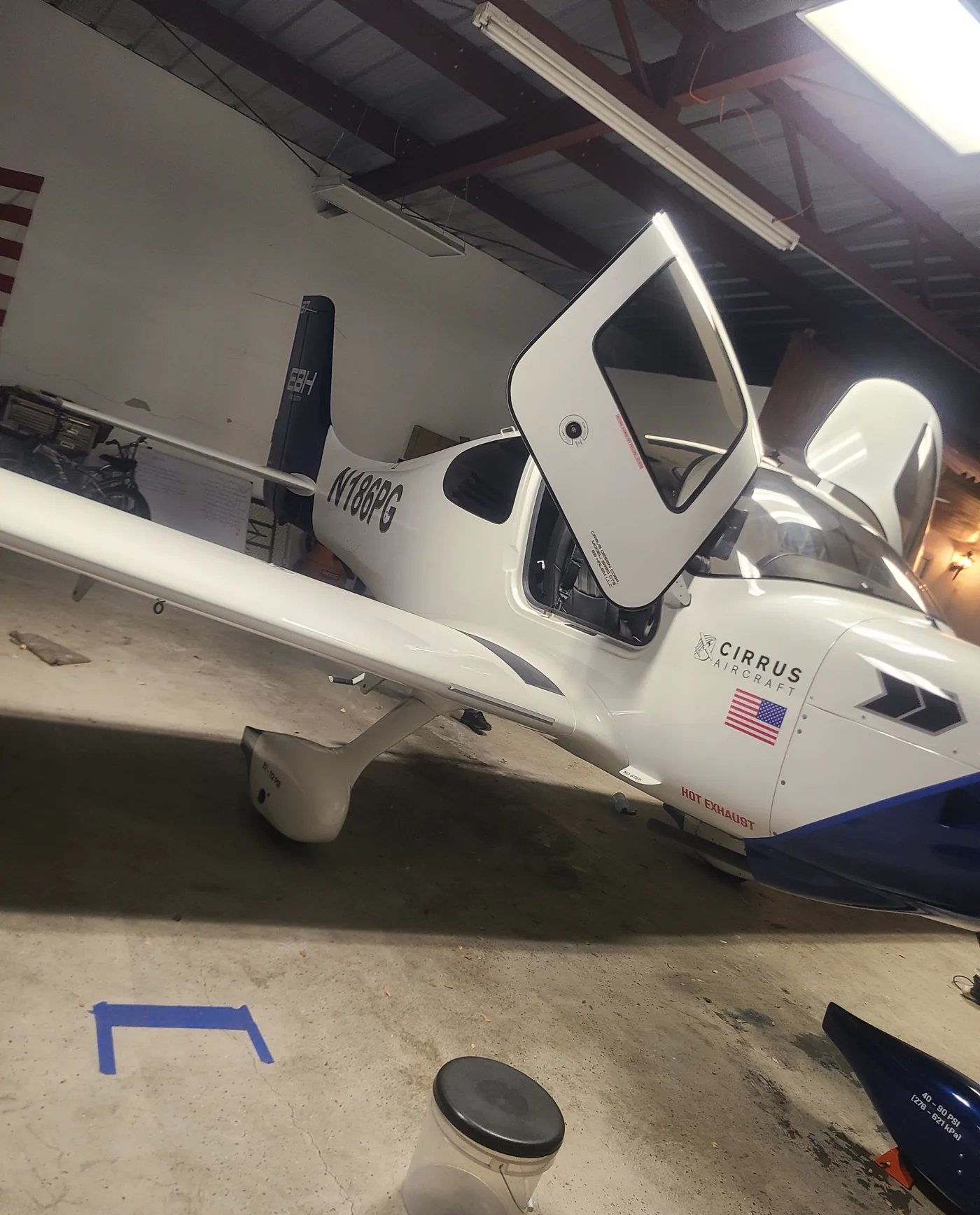
- Service
- Aircraft exterior cleaning, wash, bug and exhaust removal, belly degrease
- Method
- Hand wash, top down, aviation cleaners, soft mitt, no rotary brushes
- Where
- Your hangar or ramp, anywhere in California except San Diego County
- Hours
- 24 hours, Monday to Saturday. Closed Sunday
- Timing
- Overnight, finished before a morning departure
- Estimate
- Free, by phone. (323) 795-3215
Aircraft exterior cleaning, top down and out of the sun
Order matters more than product. The wash starts at the top and works down, one panel section at a time, so runoff never dries on a surface that has already been cleaned. Nothing gets a chance to dry on the paint, which is why this work happens at night or inside a hangar instead of on a sunny ramp in July. Cleaner drying on hot paint leaves streaks that need a second pass, and on bare metal it leaves a stain that needs polishing to remove. Before anything gets wet, pitot and static ports, AOA vanes, TAT probes, fuel vents, and drain masts get covered, and every cover that goes on gets counted back off.
Plane wash and airplane wash, what the job actually includes
People search for a plane wash or an airplane wash and mean very different things by it. A rinse and a soap pass is one job. A wash that also covers leading edges, the belly, gear wells and gear doors, the area aft of the exhaust, control surface gaps, and windows flushed and dried is another, and it takes several times as long. Joel quotes both, and says which one he is quoting. What gets skipped on a quick wash is always the same list, and it is the list that makes an airframe look old from twenty feet: streaks aft of the exhaust stack, a gray belly, and dull leading edges.
Bug and exhaust removal on leading edges
Bug remains are acidic. Fresh, they come off with a wet towel and a little dwell time. Left through a hot week on a wing leading edge, radome, or prop spinner, they etch into the top of the paint film and no amount of washing takes them out. At that point it is a soften and dwell job with a bug remover safe for the finish, worked with a soft pad, and sometimes a light polish afterward to bring gloss back. Exhaust soot is the other one. It is oily and carbon loaded, it streaks aft and down the belly, and soap does not touch it. It needs a degreaser, dwell time, and a gentle hand, because scrubbing soot is how fine scratches get into a fuselage.
Belly degrease without wrecking what is under it
The belly collects the oil, grease, hydraulic film, and exhaust, and it also holds the least forgiving surfaces on the airplane. Plenty of bellies are bare or thinly painted aluminum. Strong alkaline degreasers attack bare aluminum and can start corrosion inside a lap joint where nobody will look for a year. Household degreaser and dish soap belong nowhere near an airframe. The job is a controlled application of an aviation degreaser, dwell time, agitation with a soft pad, and a full rinse so nothing stays in the seams. Nothing gets sprayed into hinge points, control surface bearings, gear door seals, or static wick bases.
Aircraft cleaning agent choice and why pH matters
An aircraft cleaning agent has to suit the surface underneath it, not just cut dirt fast. Too alkaline and it etches bare aluminum and goes after the sealant in lap joints. Too acidic and it dulls paint and stains anodized parts. A heavy solvent load can soften acrylic windows and craze them. That is why aviation cleaners exist as their own category with their own specifications, and why the cheap barrel of truck wash sitting in the corner of the FBO is a bad idea on a painted airframe. If your maintenance provider has an approved product list, send it over and Joel works from it.
An aircraft washer who comes to the hangar, overnight
There is no shop to fly to. Joel is mobile, based in Pasadena, working every part of California except San Diego County, since 2022. Hours are 24 hours Monday to Saturday and closed Sunday, and that exists so an aircraft can be washed while it sits and be ready before the morning departure. Water access varies a lot between hangars and FBOs, and some fields restrict wash water outright, so that is one of the first questions on the estimate call. The estimate is free. Payment is cash, Venmo, or Zelle.
Answers before you call
If something is not here, (323) 795-3215 reaches Joel directly.
How is a plane wash different from a car wash?
An airframe has things a car does not, and every one of them can be damaged by water or cleaner in the wrong place. Pitot and static ports, AOA vanes, fuel vents, static wicks, control surface gaps, and acrylic windows. A plane wash is a hand wash with those covered first, done top down, using cleaners made for aviation surfaces.
How often should an aircraft be washed?
It depends on where it lives and how it flies. A hangared airplane flown on weekends goes much longer than one tied down on a coastal ramp collecting salt air, or one flying often enough to lay down exhaust soot. Bugs and soot are the real clock. Once either has baked on for a couple of weeks, removal gets slower and harder.
What aircraft cleaning agent do you use?
Cleaners made for aviation surfaces, chosen by what is underneath, whether that is painted skin, bare aluminum, acrylic, or anodized parts. No household degreaser and no dish soap on an airframe. If your maintenance provider keeps an approved product list, send it over and Joel works from that list instead.
Can you get bugs off leading edges that have been there for weeks?
Usually yes, but it is a longer job than a wash. Dried bug remains are acidic and they etch into the top of the paint film. It takes a bug remover, real dwell time, and a soft pad, plus a light polish afterward to bring the gloss back. If it has etched deep enough, some marking can stay.
Do you need water at the hangar?
Water access is one of the first questions on the estimate call, because it varies between hangars and FBOs and some fields restrict wash water. Tell Joel what your hangar has and what the FBO allows, and the job gets planned around it before anything is scheduled.
Can you wash an aircraft overnight?
Yes, that is the standard booking. Hours are 24 hours Monday to Saturday, closed Sunday. Night work is also better for the wash itself, since nothing dries onto hot paint before it can be rinsed off. Give Joel the departure time and the job gets planned backward from it.
Book a wash at your hangar
Usually answered the same day. Overnight and short notice work available six days a week.
Cash · Venmo · Zelle · Card (Square, coming soon)